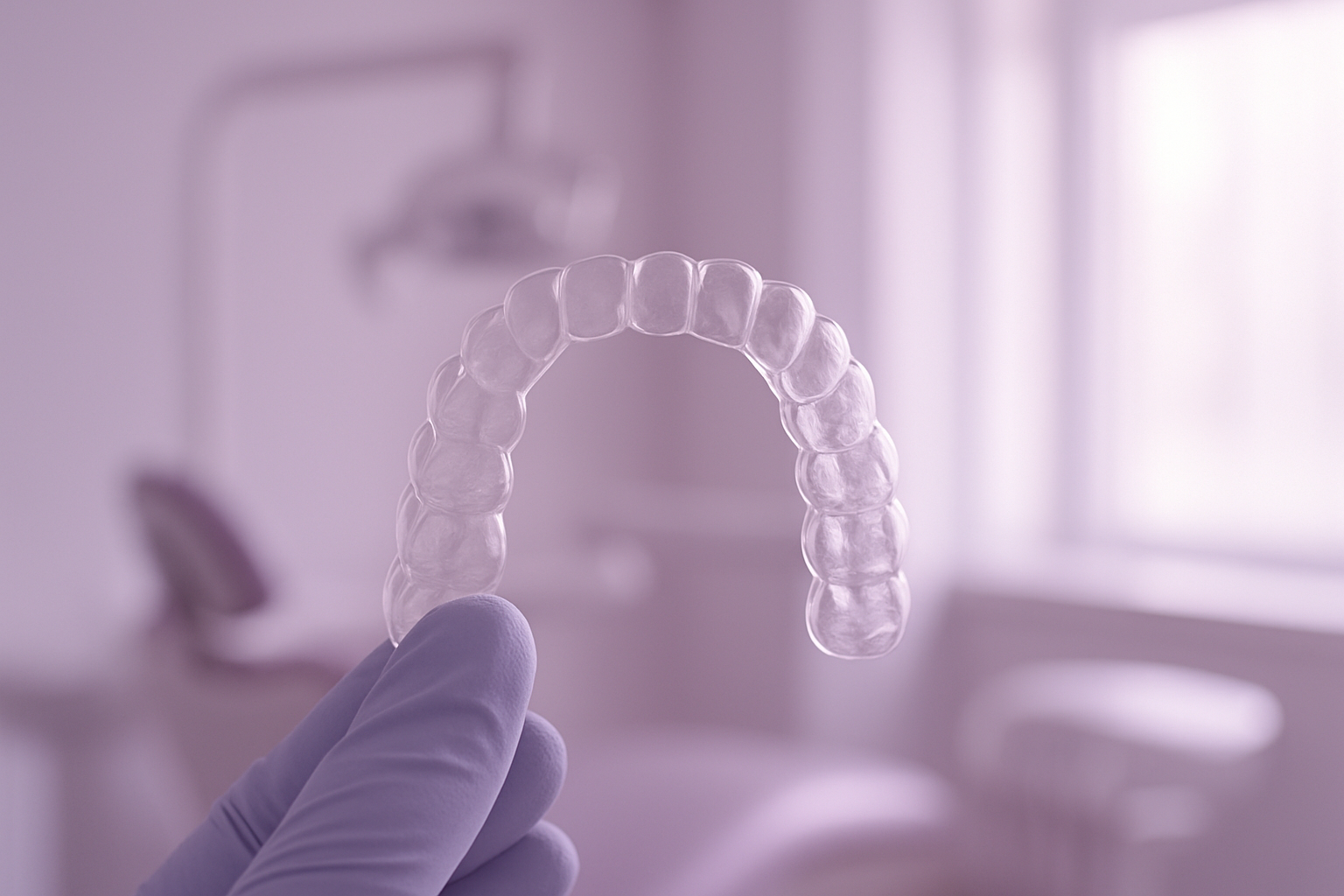
Clear aligners feel smooth, look transparent, and are strong enough to move teeth — so what are they actually made of? Understanding the material helps explain why aligners are comfortable, safe, and effective.
The material: medical-grade thermoplastic
Modern clear aligners are made from medical-grade thermoplastic — typically multi-layer polyurethane or PET-G resins engineered specifically for orthodontic use. The plastic is heated and precisely moulded over a model of your teeth, which is what gives each tray its exact custom fit.
Is it safe?
Yes. Aligner materials used by reputable manufacturers are BPA-free and biocompatible, meaning they are designed for safe, prolonged contact with the mouth. They are the same class of medical polymers trusted across dentistry.
Why the material matters for comfort and results
- Comfort: the plastic is thin and smooth, with no sharp edges, so it is gentle on cheeks, lips and gums.
- Clarity: the resin stays transparent, keeping the aligner discreet.
- Controlled force: advanced multi-layer materials hold a steady, gentle pressure, which moves teeth more predictably and comfortably than a stiff single-layer plastic.
Caring for the material
To keep the plastic clear and hygienic: rinse aligners every time you remove them, brush them gently with a soft brush, avoid hot water (which can warp the plastic), and only drink water while wearing them. Treated well, each tray performs exactly as designed for its full wear period.